Reflecting on a decade of Napoleonic hobbying
A slightly misleading title, perhaps, as I’ve collected, painted and played Napoleonics for longer than a decade. As a teenager I enjoyed the Sharpe books and dabbled in 1/72 scale engagements, after leaving the Army in my early twenties I tried 15mm, and 6mm. However, none of these really stuck, until I jumped into 28mm about 10 years ago.
A recent conversation with friends about this period elicited the question about whether the details and variations of uniforms puts people off the period. I don’t have an answer, but it prompted me to reflect on my own journey into producing figures, which requires me to make decisions about which uniform details to include in our figures, and how my own collection has evolved over a decade.
Starting out, I bought lots of job lots of figures (restoration being a part of the hobby I love). From these I made up units, in no particular order. Over time I discerned my preferred manufacturers and which figures worked well together. This led me to sell off the units I didn’t like so much, and backfill with replacements from my preferred sculptors.
Later I decided to start building towards specific orders of battle, providing more focus and the ability to collaborate with friends towards bigger games. It also required a reduction in fancy units, and a shift to production line painting to get the numbers up, particularly for the line infantry, which usually forms the bulk of an army.
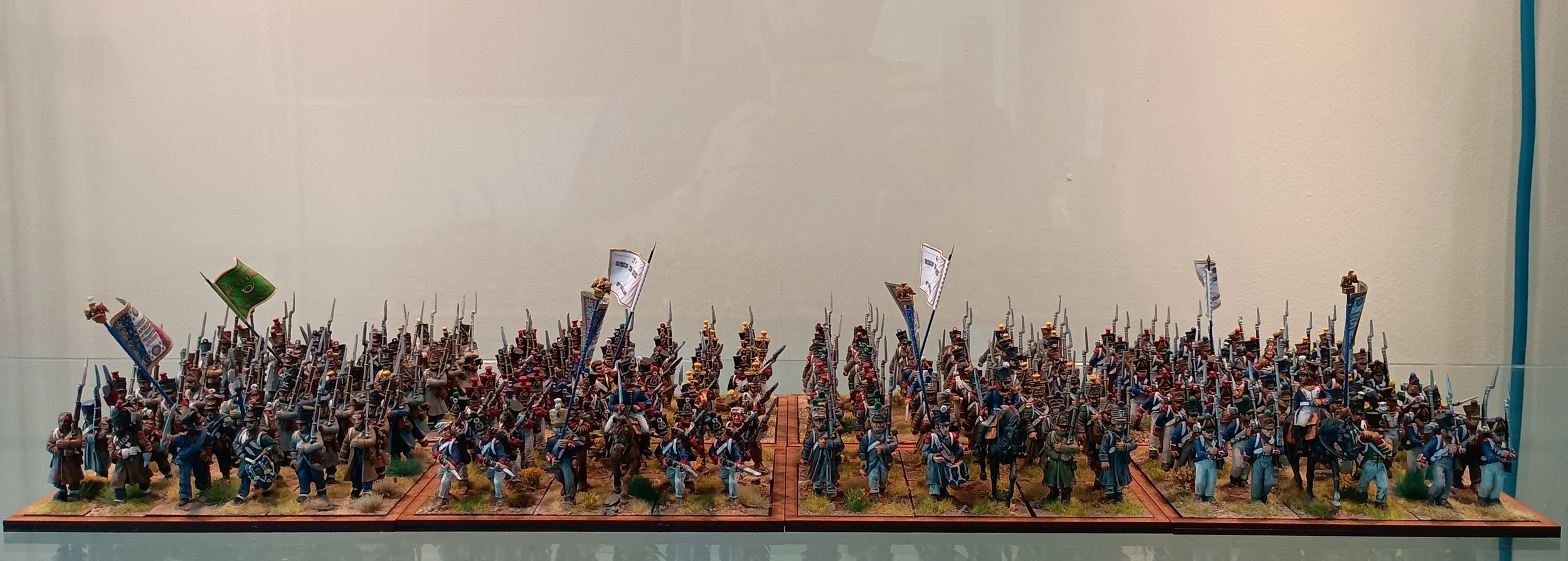
An example of the final iteration of a project - the 2nd Division of the Army of the Centre under General de Division Louis Cassagne at the battle of Vittoria in 1813 - all in Bardin regulation uniform, post 1812-style colours and fanions, and with the correct fanions to reflect the battalions present (as best I can work out).
The third evolution of my hobby was triggered by the orders of battle. I knew about uniform changes over time, but hadn’t really applied this knowledge, so I reorganised the collection into early and late French. All my British were early war. I then realised I needed to update flags to match the time period for the orders of battle. Much industry ensued, albeit with little obvious output to the untrained eye!
The journey is relevant to our product design process as I’ve always been a bit of a timeline guy (I read archaeology at university). So you’ll see in our store that our Pionnieres Noires have a timeframe (1806-1808, under Joseph), as they then morph into the Real Africano (1808-1811, under Joachim) and then into the 7° Reggimento Fanteria di Linea (from 1811-1815, the end of Joachim’s reign).
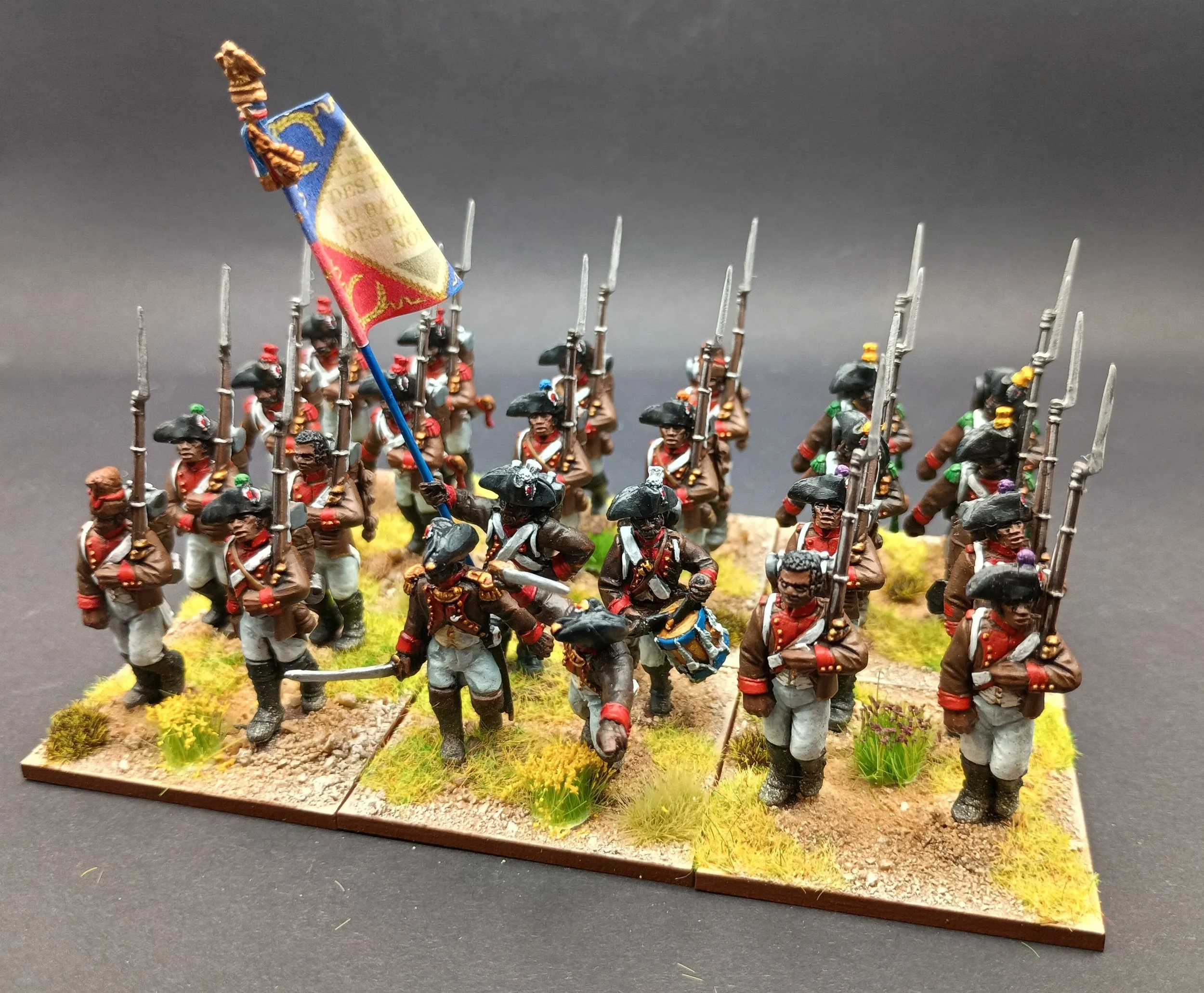
Pionnieres Noires in early French uniform, bicornes and carrying a French Eagle and colours.
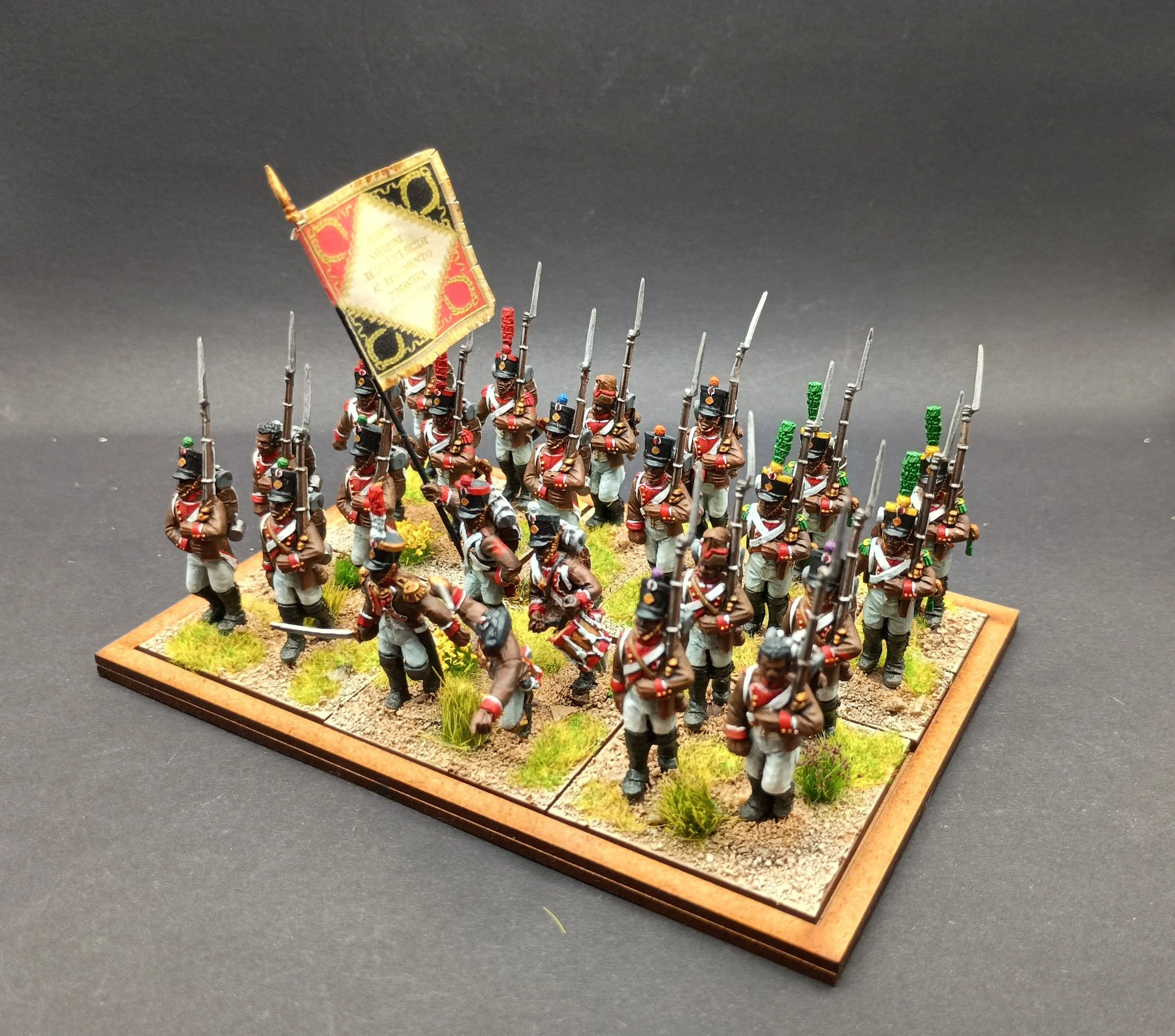
The Real Africano - switching to shakoes with a Lozenge plate, and adopting Joseph’s colours from the newly created Kingdom of Naples
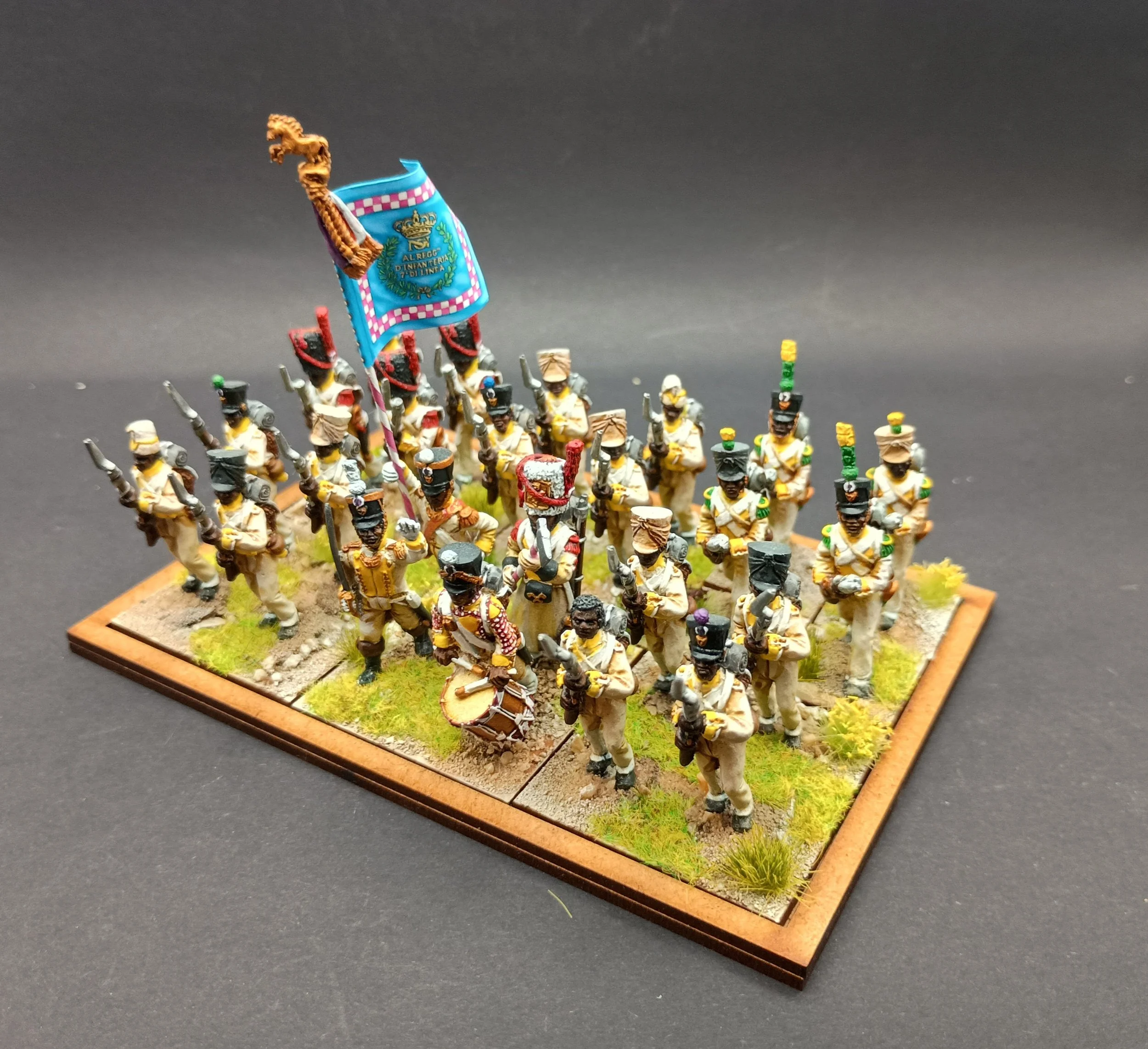
Now as the 7th Line Infantry Regiment after Murat’s uniform reform of 1811, adopting a distinctive Neapolitan uniform, and carrying Murat’s updated colours and prancing horse finial.
When releasing figures, we do have to make a decision on the uniforms, we probably get some details wrong, but key considerations for us are: are the figures distinctively illustrating a particular nation or army and, do they look good? Collectors and painters can, of course, adjust the models so that they better reflect the image they have in their heads of how troops would have looked in the field. However those that want a unit painted and on the table can do so with the aid of our painting guides, which take a fairly simplistic approach to uniforms.
